EV Charging at Commercial Properties: What Property Managers Need to Know
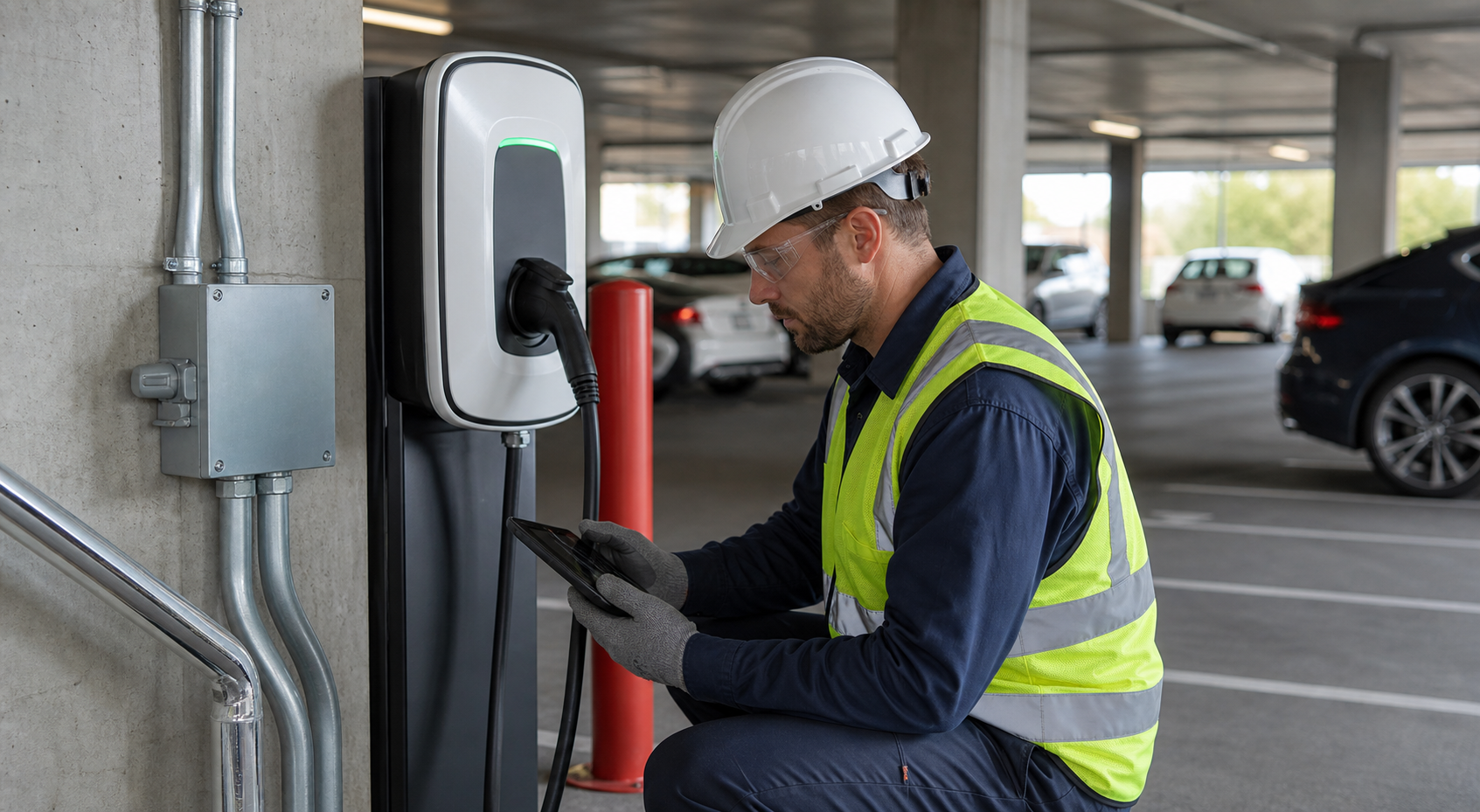
EV charging has crossed from amenity to expectation at a lot of commercial properties in the DMV. Tenants ask about it. Prospective tenants factor it into decisions. And increasingly, Maryland and Virginia are building EV-readiness requirements into commercial building codes that make this less of a when-you-get-around-to-it item.
Before you start collecting proposals, here’s what the installation process actually involves — and what to ask your electrician before anyone pulls a permit.
Why Commercial Properties Are Adding EV Charging Now
Tenant demand is the primary driver at most multifamily and office properties. EV adoption in the DMV market has accelerated, and tenants expect their building to keep pace. At retail and restaurant properties, customer dwell time at Level 2 chargers is long enough to meaningfully influence where people choose to go.
Beyond demand, Maryland and Virginia have both enacted commercial building codes that include EV-readiness requirements. Maryland’s Building Performance Standards and Virginia’s updated commercial construction codes require certain new and substantially renovated commercial buildings to include EV-capable parking spaces — meaning the conduit and electrical capacity are roughed in even if chargers aren’t installed on day one. If you’re planning a renovation that crosses the threshold for a major permit, this may apply to you now.
The Installation Process, Step by Step
Load analysis first. Before any trenching or equipment selection, a commercial electrician needs to analyze your existing electrical load and panel capacity. EV charging — particularly if you’re adding multiple stations — draws significant power. If your panel doesn’t have headroom, you’re looking at a panel upgrade or service entrance work before chargers go in. Skipping this step is how projects stall mid-construction.
Panel capacity check and subpanel work. Depending on the number of chargers and their location relative to your main panel, the project may require a dedicated subpanel in or near the parking structure. This is common at larger parking garages and surface lots where running individual circuits from the main panel would be impractical.
Trenching and conduit. Getting power to parking spaces that aren’t directly adjacent to electrical infrastructure means trenching. This is often the most disruptive part of the project — plan for it, especially if you’re adding chargers to a parking lot or garage level that doesn’t have existing electrical infrastructure nearby.
Equipment selection and installation. Chargers get mounted, connected, and commissioned. If you’re using a networked charging management platform (which most commercial properties should), that configuration happens at this stage.
Level 2 vs. DC Fast Charging: Which Is Right for Your Property?
Level 2 (240V) is the standard for most commercial property types. Vehicles charge in four to eight hours, which matches the dwell time at office buildings, multifamily properties, and most retail locations. Level 2 infrastructure is significantly less expensive to install and is the right choice for the vast majority of commercial applications.
DC Fast Charging (DCFC) delivers a meaningful charge in 20–40 minutes. It makes sense at locations with high vehicle turnover and shorter dwell times — gas station-style convenience locations, certain retail anchors, or fleet charging depots. The electrical infrastructure requirements are substantially higher, and the equipment costs more. For most office and multifamily property managers, Level 2 is the answer.
Questions to Ask Your Electrician Before You Start
- Have you done load analysis on our existing service, or are you assuming we have capacity?
- Are we subject to Maryland or Virginia EV-readiness requirements under the planned permit scope?
- What does the conduit routing look like, and where does trenching become necessary?
- Are you licensed in our jurisdiction and familiar with local permit requirements for EV infrastructure?
- What charging management software do you recommend, and does that affect your equipment spec?
Getting clear answers to these before the project starts will save you from scope surprises mid-project.
Getting Started
Reyco installs commercial EV charging infrastructure across DC, Maryland, and Virginia. We start every project with a load analysis and site assessment so you know what you’re working with before anything gets designed or priced.
Contact us to schedule an assessment or call (301) 843-1848.
We're available 24/7 for emergencies across DC, Maryland, and Virginia.