How Emergency Electrical Service Actually Works — From the Call to the Invoice
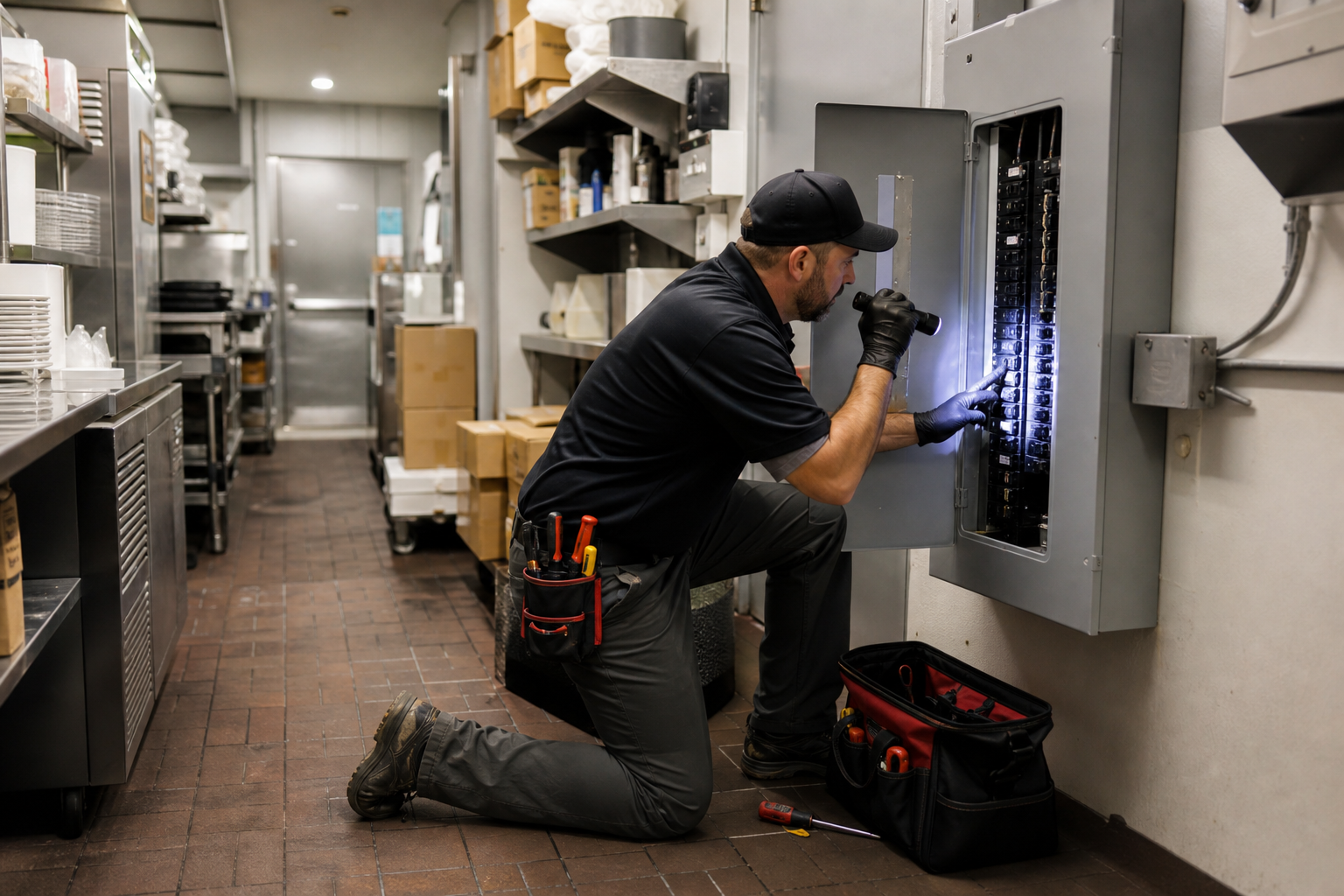
Most facility managers have called an electrician in a panic at least once. A breaker panel trips at 11 PM. A restaurant’s kitchen goes dark an hour before opening. A parking lot’s exterior lighting fails on a cold Tuesday night with a full building of tenants.
What happens next depends almost entirely on the contractor you’ve hired — and specifically, whether they’ve built a real dispatch system or they’re just texting someone’s personal cell.
Here’s how emergency service works at Reyco, from the moment you call to the invoice in your inbox.
Step 1: The call gets classified
The first thing our dispatch team does is classify your call: emergency or scheduled.
An emergency means something is actively affecting your operations right now — a failed circuit that’s shutting down equipment, a power outage in occupied space, a safety hazard that needs to be addressed immediately. A scheduled call is something that needs attention but can be sequenced into the next available window.
This classification determines what happens in the next 60 seconds.
Step 2: The right tech gets assigned
Not every electrician is equally strong at every problem type. Our service coordinator knows who’s available, where they are, and what they’re best at. If it’s a daytime emergency, the closest available tech with the right skill set gets the call — or someone gets rerouted from a scheduled job that can flex.
If it’s after hours, we run a dedicated on-call system: one primary on-call tech, one backup, rotating weekly. There’s always someone ready. The call doesn’t roll to a voicemail. It goes to a person.
Our techs carry tablets with BuildOps, so by the time they’re in the truck, they already have the job details, the facility address, the contact name, and any relevant history for that account. There’s no “I’ll call you back when I have more information” moment. They already have the information.
Step 3: The tech arrives with context
This is where a lot of contractors fall apart. The tech shows up, doesn’t know the facility, spends 20 minutes asking questions the dispatcher already knew. With our system, that doesn’t happen.
The tablet workflow gives the tech everything they need before they walk through the door: facility type, prior service history, any known issues, and the name of the person they’re meeting. They can get started immediately.
Step 4: Fix, document — same visit; invoice follows
When the work is done, the tech captures it in BuildOps: photos, work performed, materials used, sign-off from the on-site contact. The work order is complete the same visit; your digital invoice follows by the next business day (often the same business day when the call wraps during business hours).
You don’t wait 45 days for a paper invoice. You don’t have to chase someone down to find out what was done. The record is in BuildOps the same day.
Why the system behind the call matters
The contractor who shows up matters, obviously. But the system behind the call — how it gets dispatched, who is on-call, what tools the tech has in hand when they arrive — determines how fast you get help and how much disruption you actually experience.
If your current contractor makes you call someone’s personal cell and hope they pick up, that’s worth thinking about.
Reyco serves commercial facilities across DC, Maryland, and Virginia with 24/7 emergency response. Get in touch or call us directly at (301) 843-1848.
We're available 24/7 for emergencies across DC, Maryland, and Virginia.