When to Replace vs. Repair Your Commercial Electrical Panel
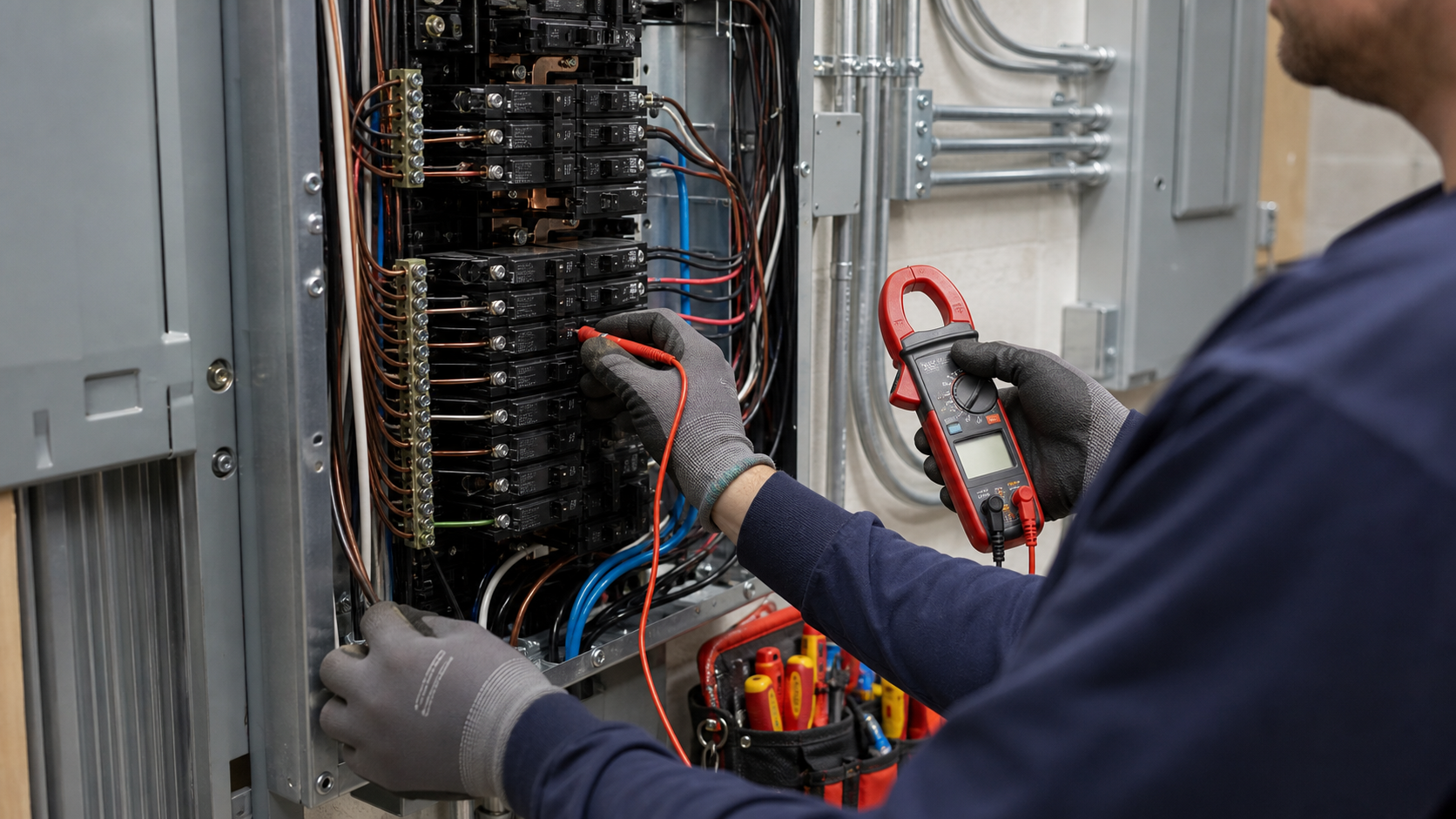
A tripping breaker doesn’t always mean a panel replacement. But an aging panel in a commercial building is one of those things you can defer until you really can’t. When the signs start stacking up — age, capacity, visible damage, or a code compliance trigger — putting off the decision usually costs more than making it.
Here’s a practical breakdown of what warrants a full replacement, when a targeted repair is sufficient, and what the process looks like when you do need to replace.
Signs Your Panel Needs to Be Replaced
Age over 20 years. Most commercial panels are rated for a 25–40 year service life under normal load. If your panel is pushing 20 years or more, it deserves a closer look — especially if the building’s electrical load has grown since it was installed. Older panels were often sized for significantly lower demand than today’s HVAC systems, lighting retrofits, and equipment require.
Frequent or unexplained breaker trips. An occasional trip is normal. Breakers that trip repeatedly under normal load, or that reset and trip again quickly, signal that the panel is consistently running at or beyond capacity. This isn’t a nuisance — it’s a sign the system is working harder than it’s designed to.
Visible scorch marks, burning smell, or heat around the panel. These are not cosmetic issues. Discoloration around breakers or the panel enclosure, a persistent burning odor, or a panel that’s warm to the touch indicate an arcing or overheating condition. Stop deferring and call a commercial electrician the same day.
Capacity issues. If you’re adding equipment, HVAC zones, EV charging, or new tenant fit-outs and your electrician is telling you there’s no room in the panel, that’s a capacity problem. A panel that can’t safely accommodate your load needs either a subpanel or full replacement depending on the situation.
DC BEPS compliance or permit triggers. In the District, the Building Energy Performance Standards (BEPS) benchmarking and compliance cycle is pushing building owners to evaluate their electrical infrastructure as part of broader energy upgrades. If you’re pulling a permit for a significant renovation, expect the inspector to look at your panel age and condition. A non-compliant panel can hold up a permit or trigger a required upgrade.
When a Repair Is Sufficient
Not every panel issue requires full replacement. If a single breaker has failed but the panel itself is in good condition and appropriately sized, swapping the breaker is the right call — fast, low-cost, and the correct scope of work.
Similarly, if a wiring connection at a specific circuit has loosened or corroded, targeted repair at that point may fully resolve the issue. A good commercial electrician will assess what’s actually causing the problem before recommending a scope.
The key question is whether the issue is isolated or systemic. Isolated problems get isolated fixes. A panel that’s aging, undersized, or showing multiple failure modes at once is a systemic problem.
What Panel Replacement Actually Looks Like
The process starts with an assessment: load calculation, physical inspection of the existing panel, and a review of your current and planned electrical demand. From there, the electrician specs the right replacement — capacity, configuration, and any code requirements for your jurisdiction.
In DC, Maryland, and Virginia, panel replacement work requires a permit. That means your contractor needs to be licensed in the relevant jurisdiction, pull the permit themselves, and have the work inspected. Budget for a permit lead time, especially in DC where review queues can run several weeks.
On a typical commercial panel replacement, the physical work itself takes one to two days depending on scope. The planning, permitting, and scheduling window is what drives the overall timeline. Plan for two to four weeks from assessment to energized panel in most cases.
For cost, the range is wide depending on panel size, location, existing infrastructure, and jurisdiction-specific requirements. Get a formal assessment and quote — the variables matter too much for a ballpark to be useful.
Getting a Panel Assessment
If your panel is showing any of the signs above — or if you’re planning renovations that will add load — the right first step is an on-site assessment. Reyco performs commercial panel assessments across DC, Maryland, and Virginia and can tell you exactly what you’re working with and what your options are.
Request an assessment or call us at (301) 843-1848.
We're available 24/7 for emergencies across DC, Maryland, and Virginia.